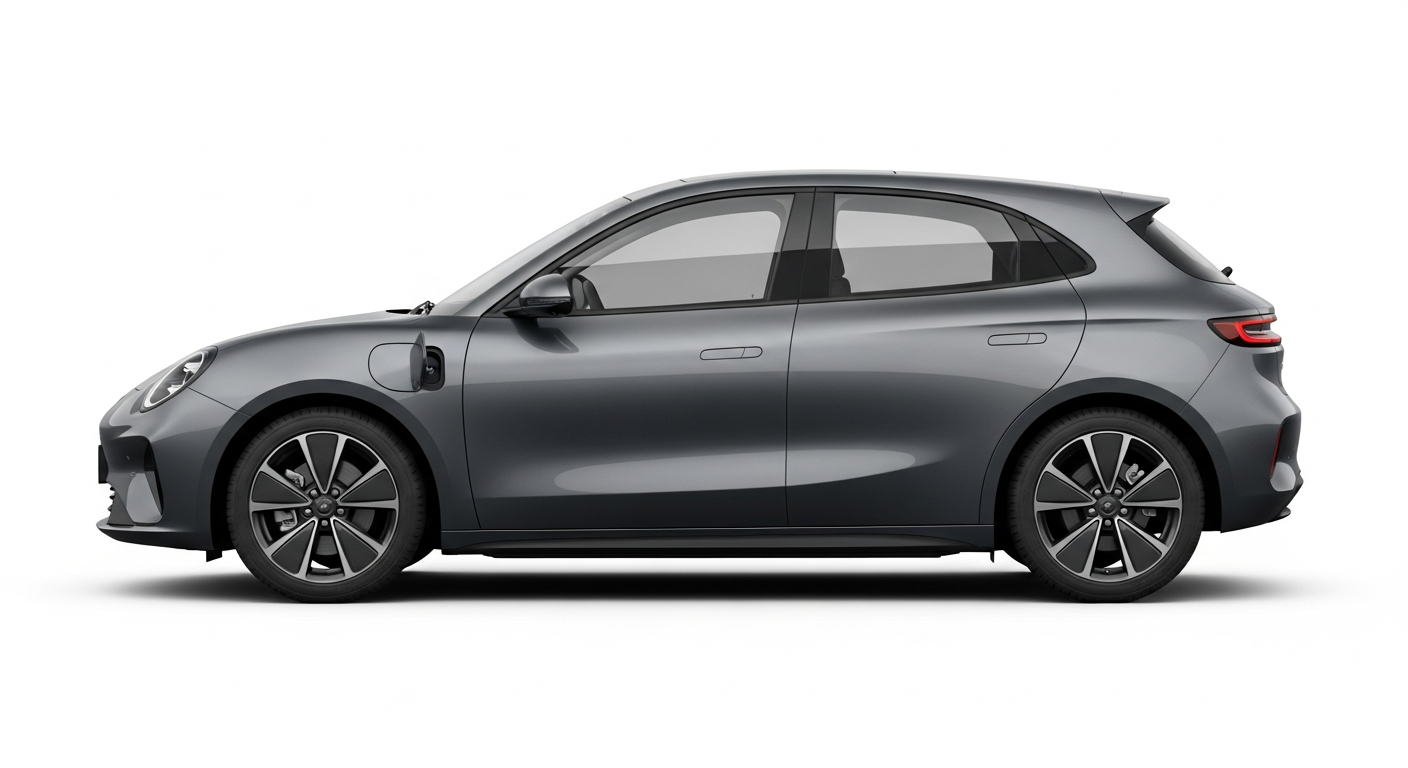

South Africa’s electric vehicle market just gained a new player with a taste for nostalgia. Chery’s iCAUR brand—pronounced ‘iCar’, renamed from iCar for trademark reasons—officially launched in late May 2026 with two boxy, retro-styled electric SUVs: the V23 starting at R519,900 and the 03T from R639,900. Both models target tech-savvy buyers seeking distinctive design and competitive pricing in the rapidly expanding sub-R700,000 EV segment.
_Showcar_iCaur_V23_No-plate_2026-01-09.jpg)
The launch comes as South Africa’s EV market hits a potential tipping point, with Autotrader reporting a 220% surge in EV searches between March 2025 and March 2026. Rising fuel prices above R30 per litre and the arrival of sub-R400,000 Chinese models are driving adoption, even as consumer-side incentives remain absent.
TL;DR
- iCAUR launched in SA with V23 (R519,900–R669,900) and 03T (R639,900–R699,900) electric SUVs in May 2026
- Both models feature 85 kW peak DC charging, 8-year/200,000 km vehicle warranties, and retro-inspired boxy styling
- V23 offers 360–430 km NEDC range; 03T delivers 418–426 km range with faster 0–100 km/h times (6.5–10.5 sec)
- Brand enters SA with 20 dealerships, expanding to ~40 by year-end 2026, targeting the growing R500k–R700k EV segment
What iCAUR brings to South Africa
iCAUR positions itself as an “emotionally charged” EV brand for younger buyers seeking personality over polish. The V23 and 03T share Chery Group engineering with the established Omoda and Jaecoo brands but adopt a playful, adventure-focused design language. Think squared-off fenders, vertical LED headlights, and modular styling cues inspired by classic off-roaders—a stark departure from the aerodynamic teardrop shapes dominating the EV landscape.
_front_view.png)
“We’re here to make electric motoring more personal, more joyful and, importantly, more accessible,” iCAUR South Africa stated in its August 2025 market-entry announcement. The brand’s SA rollout includes 20 dealerships at launch, expanding to approximately 40 by year-end 2026, with an 8-year/200,000 km vehicle warranty, 8-year/160,000 km battery warranty (first owner), and 5-year/100,000 km service plan—matching or exceeding most Chinese EV competitors.
Model lineup and pricing
Both models arrive in rear-wheel-drive (2WD) and dual-motor all-wheel-drive (AWD) configurations. The V23 emphasises retro charm with round headlights and a Land Cruiser FJ-inspired silhouette, while the 03T adopts a more angular, modular design with vertical LED clusters and rugged body cladding.
| Model | Price (ZAR) | Battery (kWh) | Range (km, NEDC) | Power (kW) | 0–100 km/h (sec) | Drivetrain |
|---|---|---|---|---|---|---|
| V23 2WD | R519,900 | 59.93 | 360 | 100 | 11.0 | RWD |
| V23 AWD | R669,900 | 81.8 | 430 | 155 | 7.5 | AWD (dual-motor) |
| 03T 2WD | R639,900 | 65.69 | 426 | 135 | 10.5 | RWD |
| 03T AWD | R699,900 | 69.7 | 418 | 205 | 6.5 | AWD (dual-motor) |
All four derivatives support 85 kW peak DC fast charging, allowing 10–80% top-ups in approximately 30 minutes on compatible infrastructure. Range figures use the NEDC cycle, which typically overstates real-world performance by 15–25% compared to WLTP or EPA standards—expect practical highway range closer to 280–350 km depending on driving style and climate control use.

How iCAUR fits into SA’s EV boom
The iCAUR launch arrives during a watershed moment for South African electric mobility. BYD’s Dolphin Surf sold 302 units in April 2026, outselling petrol rivals like the Honda Fit and Kia Picanto—a first for a sub-R400,000 EV in SA. Meanwhile, BYD’s African market share surged from 4% in 2023 to 35% in 2025, according to the IEA’s 2026 Global EV Outlook.
The sub-R700k battleground
iCAUR enters a crowded but fast-growing segment. Key competitors include:
- BYD Atto 3: R548,000 (Standard Range) to R628,000 (Extended Range), 345–420 km WLTP range, established charging network support
- GWM Ora 03: R499,950 (Standard) to R549,950 (GT), 310–420 km WLTP range, 5-year/100,000 km warranty
- Geely Galaxy E5: Expected Q3 2026 launch, targeting R550,000–R650,000 bracket with 440 km CLTC range
- Chery Omoda E5: Sibling model from parent brand, R499,900–R549,900, 430 km NEDC range
iCAUR’s differentiator is design. Where rivals prioritise aerodynamics and efficiency, the V23 and 03T lean into character—squared-off proportions, functional roof racks, and modular accessory mounts that evoke overlanding culture. “The new 03T is a very clear expression of what iCAUR stands for,” the brand stated at launch—a tech-forward platform wrapped in adventure-ready aesthetics.
South Africa’s PHEV preference
p>One wrinkle: plug-in hybrids outsold pure battery-electrics by more than 2:1 in SA in 2025, accounting for 70% of the country’s 3,800 total EV sales. This makes South Africa a global outlier, reflecting persistent range anxiety and grid reliability concerns. iCAUR’s pure-EV lineup bets that improving charging infrastructure and falling battery costs will shift buyer sentiment—but the brand has hedged its bets. The V27 range-extender SUV, featuring a 1.5-litre turbo engine paired with a 34.3 kWh battery for 150 km pure-electric range and 1,000+ km total range, is slated for Q4 2026 or early 2027.
Charging infrastructure: can the grid keep up?
iCAUR’s 85 kW peak charging capability assumes access to DC fast chargers—a resource still unevenly distributed across SA. As of early 2026, GridCars operates over 450 public AC and DC charging stations, with the Charge Pocket app connecting drivers to 445 sites representing 650 chargers and more than 1,200 connectors. Rubicon’s network comprises 103 public stations and 20 OEM partner dealership sites, with total installed capacity of 6,648 kW.
Charging costs remain a moving target. GridCars’ standard rates sit at R5.88 per kWh for AC and R7.35 per kWh for DC as of 2026, meaning a 10–80% top-up on the V23 AWD’s 81.8 kWh battery would cost approximately R420 and deliver roughly 300 km of real-world range—comparable to R450–R500 for 300 km in a petrol SUV averaging 9 litres/100 km at R30/litre.
Infrastructure is expanding rapidly. Rubicon added 11 new Eastern Cape stations between January and February 2026, nine supporting DC fast charging, through a partnership with AIDC Eastern Cape. CHARGE (Zero Carbon Charge) launched two off-grid, solar-powered stations along the Johannesburg-Durban N3 corridor on 19 May 2026, supporting passenger EVs and electric trucks. BYD has announced plans for 300 charging stations across SA, though timelines remain fluid.
What this means for SA EV buyers
If you’re shopping in the R500,000–R700,000 bracket and prioritise design over maximum range, iCAUR merits a test drive. The V23 2WD at R519,900 undercuts the BYD Atto 3 Standard Range by R28,100 while offering comparable real-world range (expect 280–300 km highway). The 03T AWD at R699,900 delivers Land Cruiser Prado-style looks with a 6.5-second 0–100 km/h sprint—quicker than most petrol SUVs in its price class.
Practical considerations
- Charging at home: Budget R15,000–R25,000 for a 7.4 kW wall-box installation (overnight charging from empty takes 8–11 hours depending on model). A 22 kW three-phase charger cuts that to 3–4 hours but requires three-phase municipal supply and costs R30,000–R40,000 installed.
- Public charging: Plan routes around GridCars or Rubicon networks for road trips. The N3 Johannesburg-Durban corridor now has CHARGE’s off-grid solar stations, but the N1 Cape Town route and coastal N2 remain patchy outside major centres.
- Resale value: Chinese EV residuals in SA are unproven. The 8-year battery warranty transfers to the first owner only, which may impact second-hand appeal after 3–5 years.
- Service network: iCAUR’s 20-dealership launch footprint is thin compared to BYD’s 30+ outlets. Confirm your nearest service point before committing.
Who should consider iCAUR?
The V23 and 03T suit urban and suburban buyers with home charging who value design differentiation and don’t regularly drive beyond 250 km per day. If your daily commute is under 80 km return and you can charge overnight, range anxiety evaporates. The 8-year/200,000 km vehicle warranty and 5-year service plan provide peace of mind, though you’ll want to verify parts availability and turnaround times once the network matures.
Conversely, if you’re a high-mileage driver (30,000+ km/year), frequently travel rural routes with sparse charging, or need to tow, the upcoming V27 range-extender or a plug-in hybrid like the Haval H6 PHEV (R599,950) may prove more practical.
What’s next for iCAUR and SA’s EV market
iCAUR’s immediate priority is dealer-network expansion and brand awareness. The V27 range-extender SUV, featuring 1,818 litres of cargo capacity with seats folded and 50 storage compartments, arrives in Q4 2026 or early 2027 to address range concerns. Meanwhile, sibling brand Chery is preparing the Q hatchback to undercut the Geely E2 and become SA’s cheapest EV, targeting a sub-R340,000 price point with a 41.2 kWh battery and 90 kW motor.
Broader market dynamics favour growth. The 150% NEV tax deduction effective 1 March 2026 is attracting Chinese manufacturers, though consumer-side incentives remain absent. Trade Minister Parks Tau published draft amendments in May 2026 to introduce higher production credits and customs rebates for battery makers, aiming to shift SA from vehicle exporter to processed battery-mineral shipper.
Watch for:
- Chery Q launch: If Chery hits a sub-R340,000 price point, it will force BYD and Geely to respond—potentially triggering a sub-R300,000 EV by 2027.
- BYD’s 300-station rollout: Timeline and pricing structure will determine whether DC fast charging becomes ubiquitous or remains a premium service.
- Government EV incentives: Industry lobbying for consumer rebates (R50,000–R100,000 per vehicle) or reduced import duties continues, though National Treasury has resisted to date.
- V27 range-extender reception: If SA buyers embrace the REEV format, expect other brands to follow—potentially reviving the segment that Chevrolet Volt and BMW i3 REx pioneered.
Ready to charge smarter?
Whether the iCAUR V23 is on your shortlist or you’re considering any EV in the sub-R700,000 segment, home charging infrastructure is non-negotiable. A professionally installed wall-box eliminates range anxiety for 90% of daily driving and cuts your per-kilometre cost to under R1.00 (assuming municipal electricity at R2.50/kWh off-peak).
ChargePoint SA specialises in residential and commercial EV charger installations across South Africa, from 7.4 kW single-phase units for townhouse parking bays to 22 kW three-phase systems for multi-vehicle households. Our team handles site assessments, electrical compliance, and integration with solar-plus-battery setups to maximise off-grid charging.
Get a free site assessment and quote—we’ll calculate your overnight charging costs, recommend the right charger for your vehicle and electrical setup, and ensure your installation meets CoC requirements. With iCAUR’s 20-dealership network expanding to 40 by year-end and more Chinese EVs arriving monthly, now is the time to future-proof your home charging.
Image credits
“iCaur V23 showcar, Singapore” by Wikimedia Commons contributor, CC BY-SA 4.0 · “iCar V23 front view render” by Wikimedia Commons contributor, CC BY-SA 4.0 · “iCar 03 front three-quarter” by Wikimedia Commons contributor, CC BY-SA 4.0