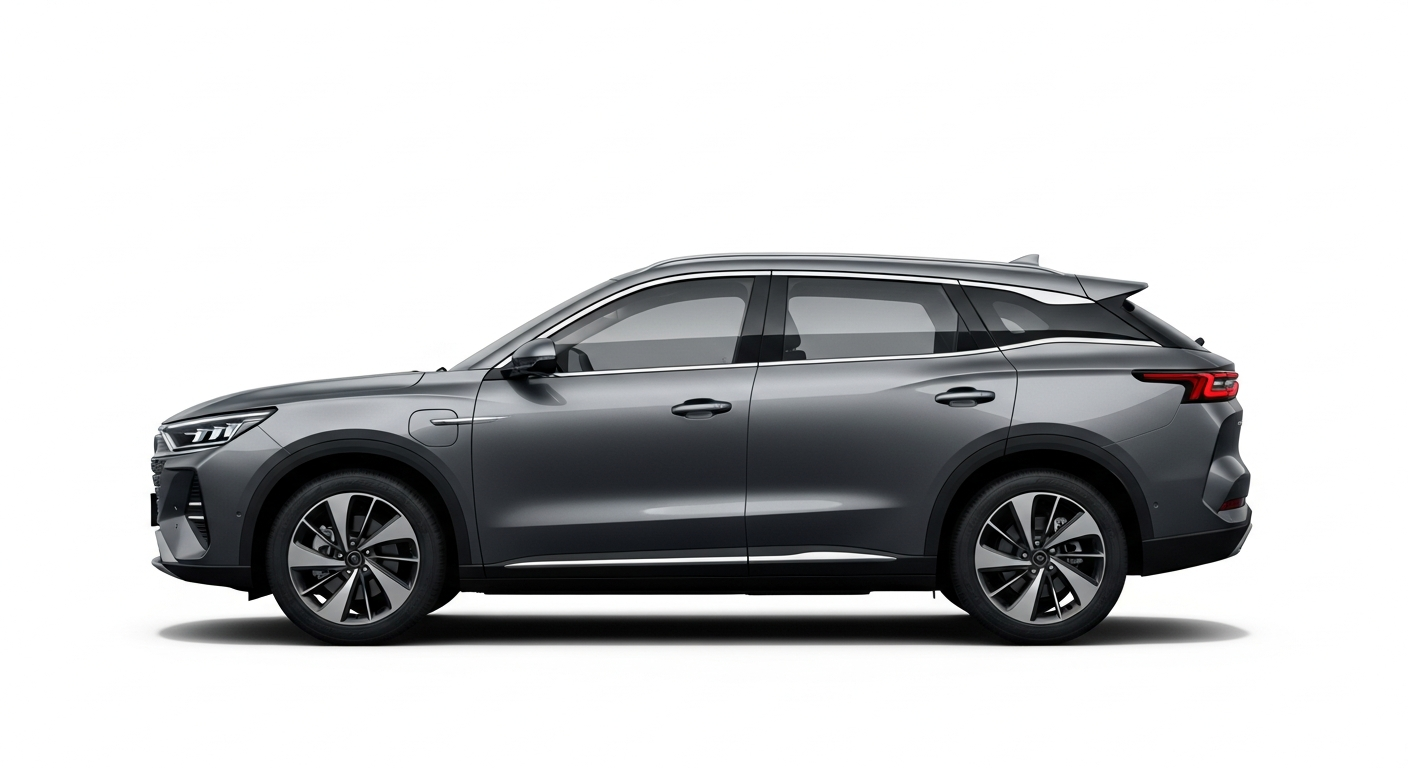


On 1 March 2026, South Africa’s 150% tax deduction for manufacturers investing in EV and hydrogen vehicle production went live—and Chinese automakers responded by slashing entry prices from R800,000 in 2023 to R339,900 today. BYD is building a nationwide network of 1-megawatt superchargers, Eskom tariffs climbed 8.76% in April, and public charging now costs R7 per kWh—more than double what you’d pay at home. The question isn’t whether EVs have arrived in South Africa; it’s whether owning one actually makes financial sense in 2026.
The incentive, reported by TechCentral, is expected to stabilise local pricing long-term as manufacturers move toward local assembly—a shift that could finally make EVs accessible beyond the wealthy suburbs of Sandton and Constantia. But policy alone doesn’t tell the full story. Legacy brands like Toyota are scrambling to launch their first battery-electric models, and GridCars operates over 450 public chargers while private operators race to deploy infrastructure faster than municipalities can keep pace.
What happened: the 150% NEV tax incentive goes live
On 1 March 2026, South Africa’s Department of Trade, Industry and Competition activated a 150% tax deduction for manufacturers investing in new energy vehicle (NEV) production—covering battery-electric, plug-in hybrid, and hydrogen fuel-cell vehicles. The incentive is designed to attract local assembly plants and reduce reliance on fully imported EVs, which currently dominate the market.
While no OEM has announced a concrete assembly timeline yet, the policy signals government intent to build a domestic EV supply chain. It arrives alongside two other seismic shifts: Chinese brands flooding the market with sub-R350k EVs, and private operators racing to deploy charging infrastructure faster than municipalities can keep pace.
Background: how we got here
South Africa’s EV journey has been slow. In 2023, the cheapest new EV cost around R800,000—a Nissan Leaf or entry-spec BMW iX1—putting electrification out of reach for most households. Load-shedding dominated headlines, and the phrase “charging an EV during Stage 6” became a punchline on social media. Public charging networks were sparse, with fewer than 300 stations nationwide.
Fast-forward to 2026: load-shedding has eased (though not disappeared), Chinese automakers like BYD, Geely, and Chery have launched aggressively priced models, and private charging operators have installed over 600 public stations. The Geely E2 and BYD Dolphin Surf now retail at R339,900, and the BYD Dolphin Surf became SA’s best-selling EV in March 2026. Toyota, historically sceptical of BEVs, confirmed three fully electric models launching in early 2026. The market is no longer a niche experiment—it’s a competitive battleground.
The numbers: what EVs cost to buy and run in 2026
Purchase price tells only half the story. The table below compares entry-level, mid-range, and premium EVs available in South Africa as of May 2026:
| Model | Price (ZAR) | Battery (kWh) | Range (km, WLTP) | Peak DC charging (kW) |
|---|---|---|---|---|
| Geely E2 / BYD Dolphin Surf | 339,900 | ~41–44 | ~300–350 | 60–80 |
| Chery Q (coming 2026) | <340,000 | 41.2 | ~300–350 | TBC |
| Volvo EX30 Single Motor | 835,500 | 51.0 | 344 | 175 |
| Volvo EX30 Extended Range | ~950,000* | 69.0 | 476 | 175 |
| BMW iX1 xDrive30 | TBC | 64.7 | 400 | 130 |
*Estimated pricing; Volvo SA lists base EX30 at R835,500.
Running costs tell a different story. Home charging on municipal electricity (averaging R3.00/kWh post-April tariff hike) costs roughly R0.55/km for a 50 kWh EV doing 350 km per charge. Public DC fast charging at R7.00/kWh (Rubicon’s rate for eMSP customers) pushes that to R1.27/km—still cheaper than petrol at R24/litre in a 7 L/100 km ICE car (R1.68/km), but the gap narrows fast. GridCars charges R7.35/kWh for DC and R5.88/kWh for AC as of August 2025.

Eskom’s 8.76% tariff hike and what it means for EV owners
On 12 March 2026, NERSA approved an 8.76% tariff increase for Eskom direct customers (effective 1 April) and 9.01% for municipalities (effective 1 July). For an EV owner charging a 60 kWh battery once a week at home, that’s an extra R10–15 per month—not catastrophic, but a reminder that grid electricity isn’t getting cheaper. Solar-paired home charging, once a luxury, is now the most cost-effective long-term play for daily drivers.
Charging infrastructure: the BYD megawatt gambit and what’s already live
South Africa’s public charging network has grown from fewer than 300 stations in 2023 to approximately 600 by early 2026, concentrated in Gauteng, the Western Cape, and KwaZulu-Natal. GridCars operates over 450 AC and DC stations with more than 650 chargers and 1,200 connectors. Rubicon’s network stood at 103 public stations and 20 dealership sites as of February 2026, handling 21,606 transactions in 2025—a 159% jump from 2024—and dispensing 625 MWh of energy.
But the headline news is BYD’s plan to install 200–300 “Flash” charging stations (up to 1,000 kW) across South Africa by end-2026. Rollout begins at BYD dealerships in April or May 2026, then expands to national highways—the biggest single infrastructure commitment in SA’s EV history. If BYD delivers, it will leapfrog the existing networks and set a new standard for charging speed. A 1 MW charger can theoretically add 200+ km of range in under 10 minutes, assuming the vehicle’s battery can accept that rate.
Meanwhile, Zero Carbon Charge (now trading as CHARGE) is building a network of 120 solar-powered stations for passenger vehicles and another 120 for trucks by 2026. Two off-grid ultra-fast chargers on the N3 corridor—one ~180 km from Johannesburg, another ~200 km from Durban—are expected by June 2026, bypassing Eskom’s unreliable grid entirely.
Fleet charging: WattSpot’s Gauteng milestone
Commercial adoption is accelerating. WattSpot, South Africa’s first dedicated fleet charging network, logged 18,884 charging sessions in Gauteng as of May 2026, supporting 240 vehicles across Wynberg, Northgate, and Fourways sites since launching in November 2025. The network has enabled 2 million kilometres of commercial driving—proof that fleet operators see EVs as viable for high-utilisation routes.
Stakeholder reactions: who’s saying what
Government: The 150% NEV tax incentive signals policy commitment, but implementation details remain vague. No OEM has announced a firm assembly timeline, and critics note that South Africa’s automotive incentive schemes historically favour established players over new entrants.
Automakers: Chinese brands are bullish. BYD’s megawatt network and sub-R350k pricing reflect confidence in SA’s long-term demand. Toyota’s pivot to BEVs—after years of championing hybrids—shows legacy OEMs can no longer ignore the threat. Toyota SA CEO Andrew Kirby framed the move as a response to “competitive pressure from Chinese EV makers flooding the market.”
Charging operators: GridCars’ expansion into the Eastern Cape (11 new stations in early 2026, nine with DC fast charging) and Rubicon’s 142% energy-dispensed growth in 2025 show private capital is betting on sustained EV adoption. But both networks rely on grid electricity, making them vulnerable to Eskom’s tariff hikes and load-shedding risk.
Consumers: Sentiment is cautiously optimistic. The R340k entry price removes the “EVs are only for the rich” barrier, but range anxiety persists outside major metros. Public charging costs (R7/kWh) erode the fuel-cost advantage unless you charge at home, and apartment dwellers without dedicated parking face a Catch-22.
What this means for SA EV buyers in 2026
If you’re considering an EV in South Africa today, here’s the practical reality:
You’ll save money if: You own a home with off-street parking, can install a 7–11 kW AC charger, and drive predictable daily routes under 200 km. Pair your charger with rooftop solar (even a small 3 kW array), and your per-kilometre cost drops below R0.30—less than a third of petrol. The Volvo EX30 Extended Range (476 km WLTP, R835,500) or BMW iX1 (400 km, 64.7 kWh) fit this profile perfectly for suburban families.
You’ll struggle if: You live in a flat without charging access, regularly drive Johannesburg–Durban (600 km), or rely exclusively on public charging. At R7/kWh, a 400 km highway trip costs ~R130 in a 60 kWh EV—cheaper than petrol’s ~R240, but not the transformation you’d expect. And if you hit a queue at a DC charger during a long weekend, you’ll wish you’d brought a flask of coffee.
The wildcard: BYD’s megawatt network. If those 200–300 stations materialise by December 2026 and deliver sub-15-minute top-ups, the calculus shifts. Suddenly, a Cape Town–Johannesburg road trip in a BYD Seal (hypothetical 500 km range) becomes feasible with one strategic charge stop. But until the network is live, it’s a promise, not a plan.
What’s next: three things to watch in the next six months
- BYD’s charging rollout timeline. The first dealership stations should appear in May 2026. If BYD misses that window, confidence in the megawatt network will crater.
- Toyota’s BEV pricing. The three models launching in early 2026 will reveal whether Toyota competes on price (sub-R600k) or leans on brand loyalty at a premium. If they price above R800k, Chinese rivals will eat their lunch.
- Local assembly announcements. The 150% tax incentive is only valuable if OEMs commit capital. Watch for press releases from BYD, Geely, or Chery about Gauteng or Eastern Cape assembly plants. If none materialise by Q4 2026, the policy is theatre.
Ready to charge smarter?
If you’re ready to future-proof your driveway, ChargePoint SA installs AC and DC chargers across South Africa, with free site assessments to match your EV, your roof, and your budget. Get a free quote today and join the thousands of South Africans already driving on sunshine.
Image credits
“Dark Days Ahead: Eskom Rolling Blackouts and Loadshedding” by Axel Bührmann (CC BY 2.0, via flickr) · Image: Volvo Cars Global Media Newsroom (press kit)