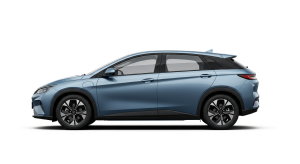
Here is the brutal arithmetic South Africa’s diesel drivers need to do right now. From midnight on 1 April 2026, the inland 50ppm diesel price rose to R26.11/L in Gauteng — a record high. That’s already painful. But the Central Energy Fund’s latest projections, assuming market conditions hold, point to a further increase for May. At a realistic mid-range forecast of R33–R35/litre diesel (based on CEF data assuming the ceasefire holds and the R3/L levy is extended), a Toyota Fortuner 2.8 GD-6 driver doing 15,000 km per year would spend over R44,625 on fuel in 2026 alone. A BYD Atto 3 owner covering the same distance, charging mostly at home on Cape Town’s off-peak rate, spends around R7,207. That’s not a marginal saving. That’s a lifestyle change. That’s a school fee. That’s a holiday. The maths is existential.
Fuel prices already increased substantially at the start of April, though the impact on motorists was partially reduced after National Treasury introduced a temporary R3.00 per litre reduction in the general fuel levy. That temporary reduction, covering both petrol and diesel, runs from 1 April to 5 May 2026 only — put in place specifically due to the ongoing US-Iran conflict. When it expires, whatever increase hasn’t already been absorbed comes crashing down on motorists all at once. The relief was a one-month cushion, not a solution.
According to Winstone Jordaan, director of charging network GridCars, the cost of running an EV is roughly two-thirds that of a petrol vehicle. That was before April’s record hikes. At current and forecast fuel prices, that ratio is about to become far more dramatic. The fuel price hikes in April, with further increases expected in May, have already added to the appeal of EV ownership. The market has noticed. The BYD Dolphin Surf — SA’s most affordable fully electric vehicle, starting at R341,900 — was comfortably BYD’s best-selling product in March 2026, with 239 units registered. South Africans are voting with their wallets. Let’s look at exactly why.
April 2026: The Fuel Prices That Changed Everything
To put that in context: a year ago, filling your Fortuner’s 80-litre tank cost around R1,560. Today it costs over R2,088 (at R26.11/L for 50ppm diesel). And that’s with government relief in place.
The average Brent Crude oil price increased from R1,130 to R1,533 per barrel (US$69.08 to US$93.67 at prevailing exchange rates) during the review period — driven by continued tension between the US and Iran, which affected crude oil supply especially through the Strait of Hormuz. Disruption in the Strait of Hormuz — responsible for roughly a fifth of global oil and gas trade — followed the collapse of talks between the United States and Iran in Islamabad, with increased naval activity and selective enforcement of a US blockade.
Here is what the current April prices look like for different grades, all effective from 1 April 2026:
| Fuel Type | Coast Price | Inland (Gauteng) Price | April Increase |
|---|---|---|---|
| 93 Unleaded Petrol | — | R23.25/L | +R3.06/L |
| 95 Unleaded Petrol | R22.53/L | R23.36/L | +R3.06/L |
| Diesel 50ppm (0.05%) | R25.35/L | R26.11/L | +R7.37/L |
| Diesel 500ppm (0.005%) | — | R25.90/L | +R7.51/L |
The wholesale price of 500ppm diesel rose to R25.90/L in Gauteng (an increase of R7.51/L), while the more common 50ppm diesel rose to R26.11/L wholesale (an increase of R7.37/L). Note that the R26.11/L figure represents the retail pump price in Gauteng for 50ppm diesel, which already includes the retail margin of approximately R2–R3 per litre above wholesale. The wholesale 50ppm price sits at approximately R23–R24/L. That’s the price WITH the R3/L levy cut. Without it — the prices we’d have seen without Treasury intervention — petrol would be sitting at R26/L and diesel closer to R29/L at the pump. The government bought SA motorists one month of breathing room. One month.
The May 2026 Forecast: From Bad to Potentially Historic
The Central Energy Fund’s daily snapshot data has been a moving target throughout April, and for good reason — fuel price projections remain highly uncertain as global markets respond to geopolitical developments and currency fluctuations. But even the more optimistic recent data points to significant increases. At the time of mid-April publishing, Brent crude was at R1,563 per barrel (US$95.52 at R16.34/US$).
Although R40/litre diesel represents a worst-case scenario if the conflict escalates, the price increase is likely to be less severe if the Middle East ceasefire holds and international oil prices remain below US$100 per barrel. Assuming the R3/L levy is extended and the ceasefire holds, South Africa’s diesel prices at a retail level are likely to average around R33 to R35 in May — representing an increase of approximately R7 to R9 per litre from April’s R26.11/L pump price. That is still a catastrophic increase. For context, diesel was R17.47/L in January 2023. We are talking about prices that are double what they were three years ago.
The worst-case scenario? Initial CEF projections in early April had analysts bracing for increases exceeding R14/L if the conflict escalated and the levy expired without extension. The daily snapshot data has since trended in a slightly better direction — but it’s clear that figures are still pointing to South Africans paying substantially more at the pumps in May. According to News24, the United States says Iran must decide whether to move forward with efforts to end the Middle East conflict, and weekend peace talks failed to produce a deal, though diplomatic efforts continue. This situation is not resolved. Anyone planning their transport budget for winter 2026 on the assumption of stable fuel prices is gambling.
Early CEF forecasts in the first week of April pointed to a diesel increase exceeding R14/L for May if the conflict escalated. Even after easing, mid-April projections show retail diesel reaching R33–R35/L in May — an increase of R7–R9/L from April’s R26.11/L.
The final overall price changes for both petrol and diesel will be confirmed later in the month, with new prices taking effect at midnight on Tuesday, 5 May. The R3/L relief expires the same day. The two events converge simultaneously. If you’re a diesel-dependent business or commuter, that date should be circled in red on your calendar.
How Much Could You Save With an EV?
Use our free calculator to compare your current fuel costs with EV charging costs.
The Real Cost Maths: Three Scenarios, One Very Clear Answer
Enough context. Let’s do the actual maths that every South African motorist should have run by now. Three scenarios, 15,000 km per year — roughly the national average for a private commuter. We’ll use April current prices and a realistic May forecast of R33–R35/L diesel and R27/L petrol (mid-range scenario based on CEF data assuming the ceasefire holds and the R3/L levy is extended).
Scenario A: Diesel commuter, Toyota Fortuner 2.8 GD-6
Mixed-cycle fuel consumption: 8.5 L/100km. At April’s R26.11/L Gauteng 50ppm diesel price: 15,000 km × 0.085 L/km × R26.11 = R33,290 per year. At a May forecast of R35/L retail: 15,000 km × 0.085 × R35 = R44,625 per year. Over five years at that rate: R223,125 on fuel alone. That’s more than a BYD Dolphin Surf costs to buy outright.
Scenario B: Petrol commuter, Volkswagen Polo 1.4
Consumption: 6.2 L/100km. At April’s R23.25/L: 15,000 km × 0.062 × R23.25 = R21,623 per year. At May’s R27/L mid-range forecast: 15,000 km × 0.062 × R27 = R25,110 per year. Five-year cost: R125,550 in fuel.
Scenario C: EV owner, BYD Atto 3
Battery: 60.5 kWh. Efficiency: 16.5 kWh/100km. Assume 80% of charging happens at home off-peak (Cape Town R1.89/kWh) and 20% at public stations (approximately R7/kWh average on DC fast chargers). Home charging cost: 15,000 km × 0.165 kWh/km × 0.80 × R1.89 = R3,742 per year. Public charging: 15,000 km × 0.165 × 0.20 × R7 = R3,465 per year. Total annual energy cost: R7,207. Five-year cost: R36,035. If you charge mostly off-peak at home in Johannesburg (R1.75/kWh), that home portion drops to R3,465 — pushing total annual cost below R7,000.
Use our EV savings calculator to run your own numbers at current and forecast fuel prices — it takes about 90 seconds and uses live tariff data.
The Savings That Make the Decision for You
The comparisons across those three scenarios, using May’s mid-range fuel pricing forecast (R35/L diesel, R27/L petrol):
BYD Atto 3 (R7,207/year) vs Toyota Fortuner diesel at R35/L (R44,625/year): R37,418 in annual fuel savings. An 84% reduction. Versus the petrol Polo at R27/L (R25,110/year): R17,903 in annual savings. A 71% reduction. Even at April’s current diesel price of R26.11/L, the EV saves R26,083 every single year against the Fortuner. That money doesn’t disappear. It stays in your account.
Note on headline savings claim: The article’s headline references “R30,000+ per year” savings, which is conservative and based on mid-range May forecasts of R33–R35/L diesel. At R35/L, the annual saving is R37,418 versus a Fortuner. In a worst-case scenario where diesel reaches R40/L retail (still within CEF’s early April projections if the ceasefire collapses and the levy expires), the Fortuner’s annual fuel cost rises to R51,000 — making the annual saving R43,793. We’ve used the R33–R35/L mid-range forecast throughout this analysis to avoid overstating the case, but readers should be aware that savings could be significantly higher if fuel prices deteriorate further. The R30,000+ figure represents a realistic, achievable saving at May’s likely pricing, not a best-case or worst-case scenario.
And here’s where it gets strategically interesting. The BYD Atto 3 is priced from R699,900 — almost exactly the same as a Toyota Fortuner 2.8 GD-6 in a comparable spec. The upfront costs are broadly equivalent. Add a home wallbox charger installation of approximately R15,000 (7.4kW, including CoC as legally required), and your total additional outlay over the Fortuner is negligible. At R37,418 in annual fuel savings (mid-range forecast), the charger pays itself back in under five months. By month 12, you’re R22,418 ahead. By year five, you’re over R172,000 ahead — and that’s before factoring in the significantly lower servicing costs of an EV versus a complex turbodiesel.
The payback argument for EVs used to be “it takes 4–5 years.” At R35/L diesel, the argument is now “it takes 4–5 months.”
The Budget Case: BYD Dolphin Surf vs VW Polo
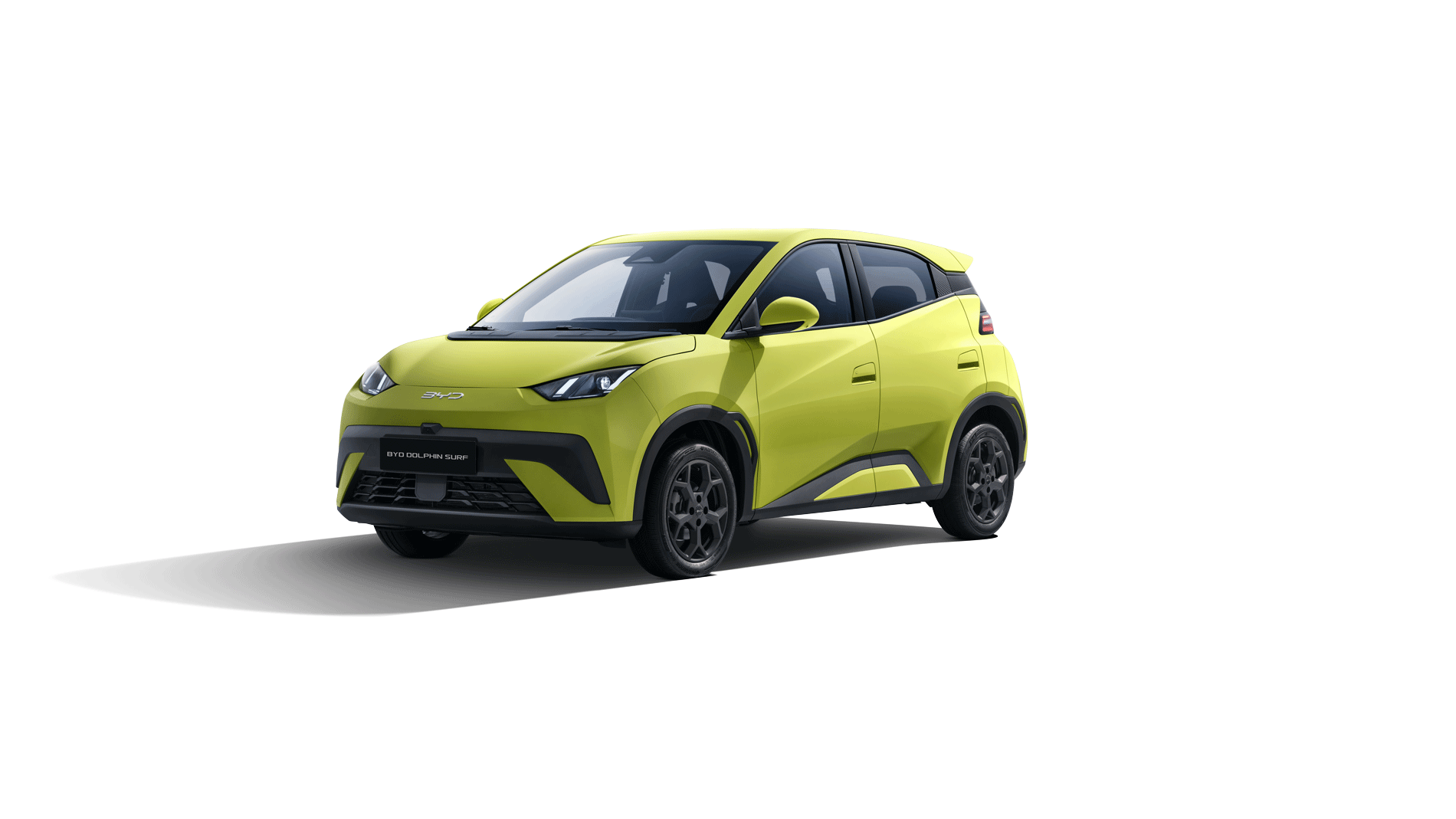
Not everyone is in the R700,000 vehicle bracket. But the sub-R400K maths is even more compelling for the right buyer. The Dolphin Surf, unveiled in September 2025, is the country’s most affordable EV. At R341,900 for the entry-level Comfort variant, it competes directly with petrol-powered compact cars such as the Volkswagen Polo Vivo, Suzuki Fronx and Toyota Urban Cruiser.
The Surf delivers a driving range of up to 295 km on a single charge, with fast charging from 30% to 80% in 30 minutes. At approximately 13.8 kWh/100km, 15,000 km per year at Cape Town’s off-peak home tariff of R1.89/kWh costs around R3,904 for home charging, plus roughly R3,220 for the 20% public charging share. Total: approximately R7,124 per year. Against a VW Polo 1.4 at May’s forecast R27/L petrol — R25,110 per year — that’s a saving of R17,986 annually. Include the R15,000 wallbox install, and the Dolphin Surf’s R54,900 premium over the entry-level Polo pays itself back in just over three years. By year three, the Dolphin Surf is cheaper in total cost of ownership. Full stop.
If you’re comparing EVs in the market right now, take a look at our full running cost breakdown for EVs vs petrol in South Africa — the numbers at current fuel prices tell a very clear story.
Ready to Install a Home Charger?
Get a free, no-obligation quote for professional EV charger installation in South Africa.
Load-Shedding: The Objection That No Longer Holds
Every time an EV conversation starts, someone in the braai circle brings up load-shedding. “But what about when Eskom cuts the power?” It’s a reasonable concern — it was. But the grid reality of 2026 is materially different from 2023. South Africa went over 200 days without load-shedding in 2025, and the early 2026 grid picture has remained stable. Eskom’s Generation Operational Recovery Plan has delivered measurable results. The rolling Stage 4 and Stage 6 blackouts that defined 2023 are, for now, gone.
That changes the calculus significantly. Home charging on a 7.4kW wallbox overnight means most EV owners top up while they sleep — and if you combine it with solar and a home battery (which an increasing number of South African homeowners already have), you’re completely insulated from any future Eskom wobbles. CHARGE’s off-grid solar-powered highway stations are totally self-sufficient in power, with on-site energy production — rates predictable and controlled, not subject to Eskom tariff hikes or load-shedding, with on-site solar and battery systems guaranteeing power for ultra-fast charging. The infrastructure is being built around grid uncertainty, not ignoring it.
Charging Infrastructure: Where Things Actually Stand in 2026
South Africa’s public charging network is small by European standards, but it’s real, it’s growing, and for the majority of EV owners — who do 80% or more of their charging at home — it’s already sufficient. GridCars manages 350 to 450 charging points nationwide, with about 85% offering DC fast charging. That’s the largest network in the country, covering most provinces with a focus on Gauteng, the Western Cape, and KZN corridors.
CHARGE, formerly known as Zero Carbon Charge, is rolling out off-grid, solar-powered ultra-fast charging hubs. Its first site in Wolmaransstad opened in late 2024, and its goal is 240 stations by 2026 — half for passenger cars and half for heavy vehicles — spaced about 150 km apart on national routes. The project, supported by the Development Bank of Southern Africa, could create the country’s first renewable, off-grid charging backbone, sidestepping load-shedding and coal dependence entirely.
CHARGE’s ultra-fast chargers can recharge most EVs from 10% to 80% in about 25 minutes. On a Cape Town to Johannesburg run on the N1, that’s a pitstop for a coffee and a bathroom break — and you leave with a full battery for the next leg. The highway charging anxiety narrative is becoming outdated. Find charging stations near you on the live map — it’s updated in real time and covers all major networks.
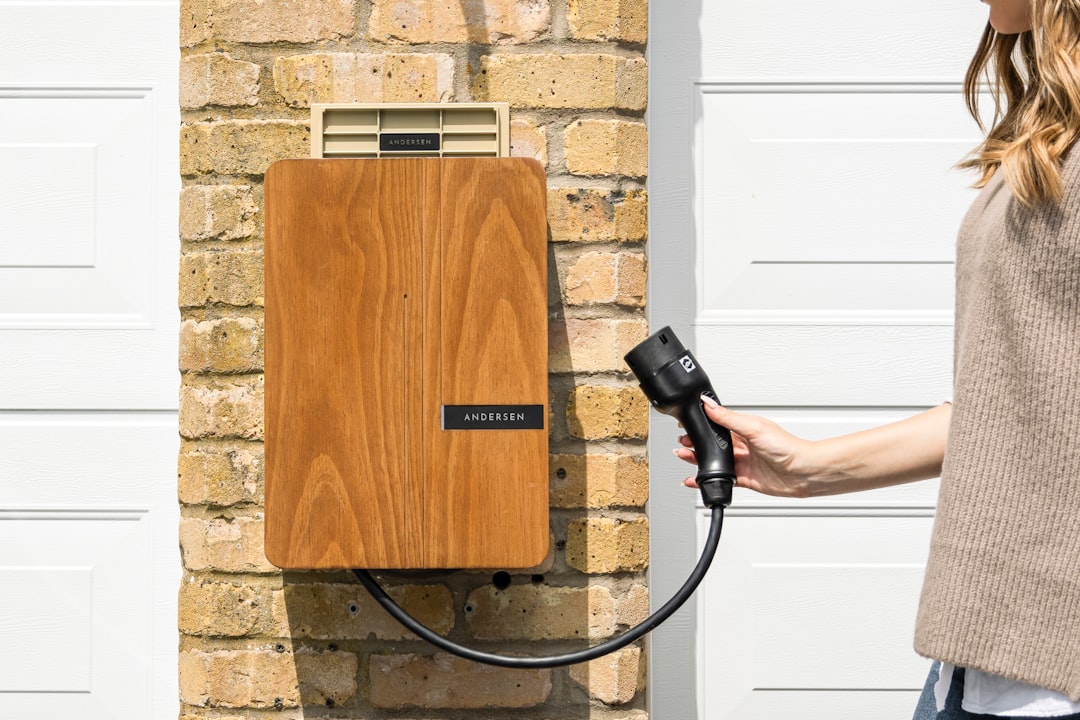
Body corporate approval for home charger installations, historically a 3-to-6-month nightmare for flat dwellers, has also been improving. And home charging dominates EV usage, with up to 80% of EV users rarely relying on public infrastructure — which puts the “but I can’t find a charger” objection in context. Most EV owners almost never need a public charger for their daily commute. The home charger is the fuel station. Get a free home charger installation quote — 7.4kW to 11kW wallbox with Certificate of Compliance, from R12,000 installed.
Find Charging Stations Near You
Explore our live map of EV charging stations across South Africa — updated in real time.
March 2026 Sales Prove the Shift Is Real
You can run numbers all day. The market data from March tells the actual story. BYD Auto — which officially launched in South Africa in mid-2023 — registered a total of 589 units in South Africa in March 2026, according to figures submitted to Naamsa. With 589 units sold, BYD narrowly trailed Mercedes-Benz but significantly outsold long-established names like Honda, Mitsubishi, and Mazda. That’s in the first month BYD even reported to Naamsa. What were they selling before that? Nobody officially knows — but it clearly wasn’t zero.
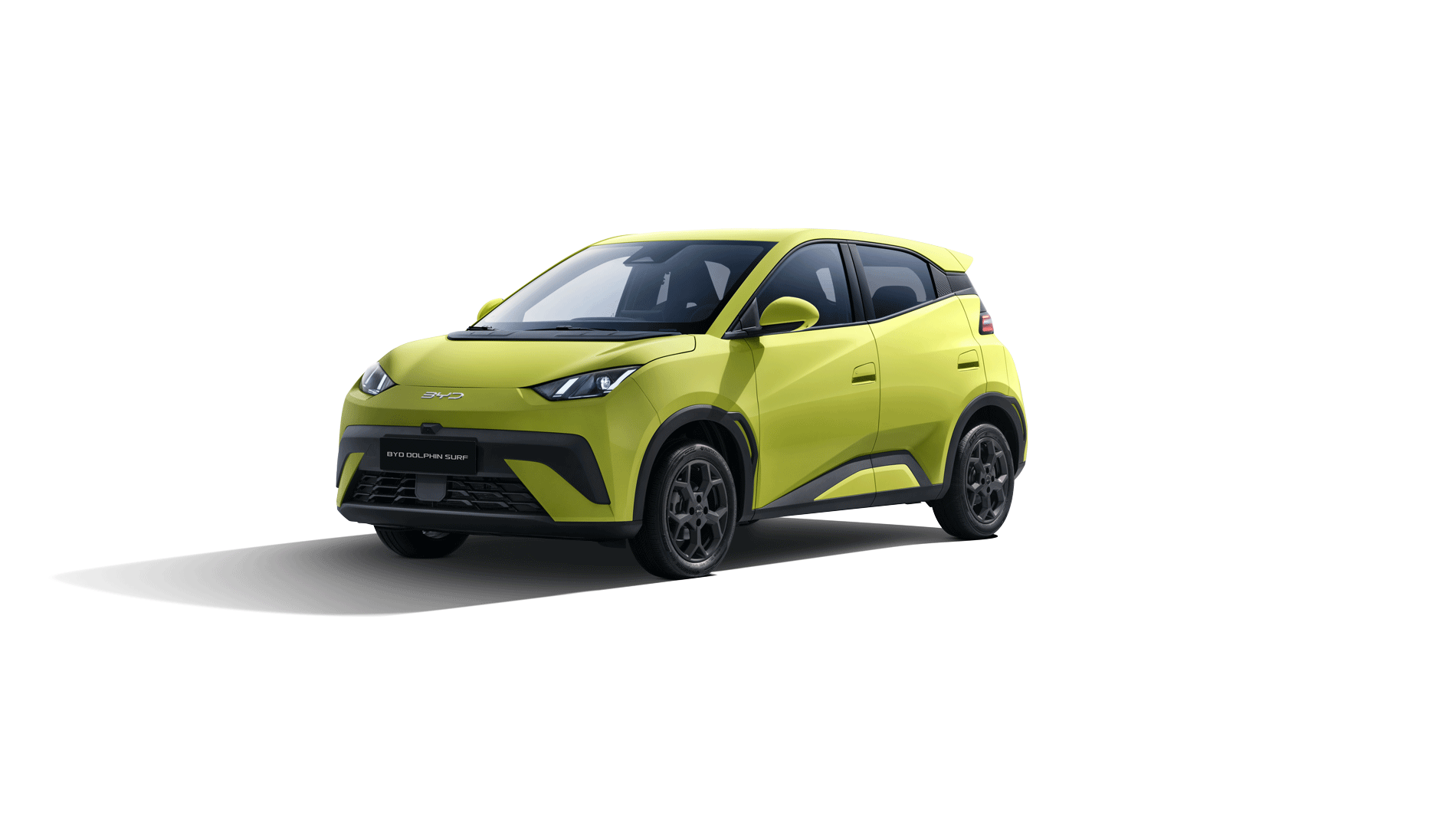
The Dolphin Surf hatchback was comfortably BYD’s best-selling product in March, with 239 units registered — translating to 40.6% of the brand’s total for the month. The second-placed BYD Atto 3 (priced from R699,900) managed 28 units, and the Volvo EX30 (priced from R835,500) took third place with 19. The Dolphin Surf outsold the next best-selling EV by nearly 10 to 1. That is not a gradual shift. That’s a demand signal.
Naamsa figures show 1,088 BEVs were sold in 2025 — and that excluded BYD, Geely, and Dongfeng, which did not report to Naamsa. It has long been argued that more South African consumers would migrate to EVs once more affordable options became available, particularly under the R400,000 mark — and the last few months have seen a number of Chinese EVs arrive at or close to that price point. The combination of affordable EVs and unaffordable fuel is not coincidental. It’s cause and effect.
The BYD Dolphin Surf sold 239 units in March 2026 — its first month of official Naamsa reporting — making it SA’s best-selling BEV by a margin of nearly 10 to 1.
There may soon be three new EV models priced under R400,000 in the local market — a significant shift in a segment dominated by expensive, premium EVs until very recently. Chery is bringing the electric Q later in 2026. Geely’s E2 has already launched. The budget EV market in South Africa is no longer theoretical.
The Bottom Line: This Isn’t EV Enthusiasm, It’s Arithmetic
Look, the EV conversation in South Africa has spent years stuck with early adopters, green credentials, and whether range anxiety was real. None of that matters anymore. What matters is that diesel could hit R33 to R35 per litre at retail in May 2026 (mid-range forecast), with worst-case scenarios pointing to R40/L. What matters is that the R3/L government relief evaporates on 5 May. What matters is that for South Africa, the implications of the Strait of Hormuz disruption are significant — the country imports most of its fuel, leaving it highly exposed to global oil price movements and exchange rate shifts, with the DMRE adjusting prices monthly.
There is no hedge against that exposure if you own a diesel-powered vehicle. There is no futures contract you can buy. There is no government programme that guarantees the R3/L levy stays beyond May. But there is a very clear financial decision available to South Africans who are in the market for a new vehicle: the running cost difference between a diesel SUV and an equivalent EV is now so large that the conversation about upfront price is almost irrelevant.
R37,418 per year at mid-range May forecasts. R43,793 per year if diesel hits R40/L. Every year. That’s what the fuel cost difference is between a Toyota Fortuner diesel and a BYD Atto 3 charging at home off-peak. At that rate, even paying a R50,000 premium for the EV makes financial sense within 16 months at mid-range pricing — or under 14 months at worst-case pricing. And the Atto 3 isn’t even priced at a premium over the Fortuner — they’re essentially the same price.
The crisis isn’t creating EV interest. It’s creating EV necessity. Calculate your savings at current and forecast fuel prices — the numbers speak for themselves.
FAQ
Will diesel really hit R40 per litre in May 2026?
While R40 diesel is considered a worst-case scenario, the price increase is likely to be far less severe than initially projected if the Middle East ceasefire holds and oil prices remain below US$100 per barrel. Assuming the R3/L levy relief is extended and the ceasefire holds, diesel prices at retail level are likely to average around R33 to R35 in May — representing an increase of approximately R7 to R9 per litre from April’s R26.11/L. However, accurate predictions are difficult to make given the political volatility in the Middle East — early projections had diesel increasing by over R14/L before easing somewhat. The situation remains live and unpredictable.
How much does it cost to charge an EV at home compared to petrol or diesel?
Using Cape Town’s off-peak electricity tariff of R1.89/kWh, the BYD Atto 3 (16.5 kWh/100km) costs approximately R3,742 per year to home-charge for 15,000 km. A comparable diesel vehicle at April 2026 prices costs R33,290 per year, and a petrol hatchback costs R21,623 per year. Even adding 20% public charging, the EV total is approximately R7,207 annually. The saving versus diesel is over R26,000 per year at current prices — and rising sharply as May approaches.
What happens if the Middle East ceasefire holds and fuel prices drop?
The CEF data currently points to petrol increases of between R2.82 and R3.19 for May, but post-ceasefire data implies these numbers could be reduced to around R1.80 if current trends persist. Even if oil falls back to pre-conflict levels, the structural fuel cost advantage of EVs does not disappear — you are still saving R15,000 to R25,000 per year versus a diesel SUV. The crisis has accelerated the calculation, but the fundamentals of EV running costs remain compelling regardless of whether fuel hits R40 or stays at R26.
Do I need a home charger, or can I use public charging only?
Home charging dominates EV usage, with up to 80% of EV users rarely relying on public infrastructure. A home wallbox (7.4kW to 11kW) installed with a Certificate of Compliance costs between R12,000 and R25,000 — a once-off expense that makes overnight charging as routine as charging your phone. Public charging at R7/kWh averages significantly more expensive than home off-peak rates, so minimising public reliance maximises your savings. Body corporate residents should note that approval processes, while improving, can take two to six weeks. Get a free installation quote here.
How long does it take to pay back the EV premium with fuel savings?
At May 2026 mid-range diesel prices (R35/L), the fuel cost difference between a BYD Atto 3 and a Toyota Fortuner 2.8 GD-6 is approximately R37,418 per year. Including a R15,000 home charger installation, the break-even point against that annual saving is roughly 4.8 months. At worst-case diesel pricing of R40/L, the annual saving exceeds R43,793 — meaning a R15,000 charger pays back in under 4.1 months. Even at April’s current diesel price of R26.11/L, the annual saving exceeds R26,000 — meaning a R15,000 charger pays back in under seven months. The budget case (Dolphin Surf vs VW Polo) reaches total cost parity within approximately three years.